Free pilot programme · Starting early 2027
TheNext Chapter
A small-group programme for people approaching – or recently past – the end of their main career, to explore together what comes next.
Eight sessions. Small groups. No lectures, and no right answers.
A pilot programme being developed with King’s College London and the University of Cambridge.

Who it’s for
Is this you?
The Next Chapter is for people at a turning point in their working life – whatever that work has been.
- You’re within about three years of leaving your main career – or you left in the last few years.
- The money side may be sorted, or sorting. It’s the bigger “what now?” question you’re turning over.
- You’d value thinking it through with other people in the same boat, rather than on your own.
- Paid work, caring, a trade, running a home, a profession – every kind of working life counts here.
Why it matters
Retirement is more than a financial decision
We plan carefully for pensions and dates. Far less attention goes to everything else a working life provides: a reason to get up, people to see, problems to solve, a sense of being useful. When those change, even a welcome retirement can feel unsettling – and it raises some big questions.
- Who am I when my job title is no longer central?
- What gives me meaning and purpose now?
- Where, and how, do I want to contribute?
- What have I always wanted to explore, but never had time for?
Universities such as Stanford and Harvard run year-long programmes for exactly this transition, but they are costly and reach few people. The Next Chapter tests a lighter, more accessible model, built around what participants say matters most: going through the change alongside others.
If you are 60 today, you have roughly an even chance of reaching 90. For many people, life after full-time work is a whole new stage – one worth exploring with care.
“Who in their 60s has 30 good new friends?”
A participant in a university post-career programme, quoted by David Brooks in The New Old Age, The Atlantic, 2023How it works
Learning from each other, not from a lecturer
The programme uses activity-based learning – a method developed through International Labour Organization training programmes worldwide. Each table works through a carefully designed workbook together, drawing on the experience in the room.
Peer-led
The experience in the group is the main resource. Nobody will tell you what your next chapter should look like.
Activity-based
Stories, conversation, short writing and practical exercises – most of the time is spent doing, not listening.
Small steps
Every session ends with one small, real thing to try before the next – a conversation, a new activity, an experiment.
A real community
You stay with the same small group throughout, and the whole cohort meets again a few months later.
The journey
Eight sessions, one thread
The sessions move from looking back, to looking around, to trying things out. Each one stands on its own, and each leads into the next.
Leaving one chapter
What has your working life given you – and what will you take forward?
Who am I without the job title?
The many parts of you that no CV can contain.
What matters now?
Values, purpose and what deserves your time.
Possibilities
Opening up options – learning, work, giving, creating, resting.
Experiment, don’t decide
Designing small, real experiments instead of a master plan.
People and community
The relationships you want to keep, deepen and build.
Contribution
What you still have to give – and what you want to give.
My next chapter
Bringing it together into a personal plan of experiments, not a rigid retirement plan.
A thread through it all. In the first session, everyone writes one private question about their next chapter and seals it in an envelope. It’s handed back, unopened, in the final session – so you can see how far your thinking has travelled.
A taste of a session
Start with a story, not a job title
The first session begins not with introductions by career, but with a small, vivid story from your working life – any kind of work, paid or unpaid. A moment tells people far more about you than a job title, and it’s much more fun to hear.
It’s typical of the programme: warm, practical and sociable, with plenty of time to think and talk – and always the option to pass.
- Think of a moment from any kind of work that made you laugh, surprised you, or taught you something about people.
- Tell your partner the story in about three minutes. They listen, then ask one curious question. Then swap.
- Tell it as a scene, not a CV: where were you, who was there, what happened?
What to expect
What it is – and what it isn’t
It is
- Thoughtful conversation with people at a similar stage
- Structured activities that help you think – and act
- Small, practical experiments between sessions
- A chance to make new connections
- Open to every kind of working background
It isn’t
- Financial or pensions advice
- Therapy or counselling
- A lecture course, or anything you’ll be marked on
- A sales pitch – it’s free, with nothing to buy
- A place where you’ll be told what to do with your life
Taking part in the pilot
What’s involved
This is the first time the programme runs, so it’s a pilot: the people who take part help shape what it becomes.
There is no fee for pilot participants. Your commitment is your time.
Eight sessions of about 2½ hours, roughly weekly. Exact dates will be confirmed with those who register.
Sessions are held in person, in London or Cambridge. Venues will be confirmed with the dates.
Working in small tables of five to seven, with the same people throughout.
Brief questionnaires at the start and end, so we can learn what works and improve it.
The group meets again a few months later to share what actually happened next.
Who’s behind it
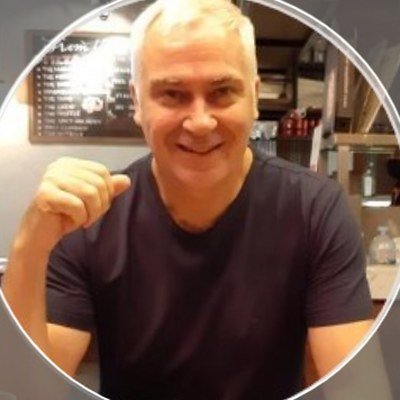
Charles Bodwell, programme convener
Charles is a Fellow at the Judge Business School, University of Cambridge, and a doctoral researcher at King’s College London. He previously headed the International Labour Organization’s activity-based training programmes, working with leading firms including Seagate, IBM, Nike, HSBC, Samsung and many others, developing more than 200 learning modules used by groups around the world – approaches built on the idea that people learn best from one another.
The Next Chapter grew out of a simple question: could a university help people reach the reflection, community and learning that this major life transition calls for – not through more expert teaching, but by creating the conditions in which people help each other work it out?
Connect on LinkedInTwo-minute check
Is this for me?
Three quick questions. There are no wrong answers – it just helps you see whether this pilot is a good fit.
Register your interest
Tell us a little about yourself
It takes about two minutes. Registering doesn’t commit you to anything – we’ll be in touch with dates and details, and to talk through whether the pilot suits you.
Email cmb46@cam.ac.uk and we’ll get back to you.
Questions
Frequently asked questions
Do I have to have retired already?
No. The programme is for people roughly three years either side of leaving their main career – so you may still be working, winding down, or recently finished. Mixing people at different points is part of what makes the groups work.
Is it really free?
Yes. The pilot is free for participants. All we ask is that you commit to attending the sessions and share brief feedback.
What kind of career do I need to have had?
Any kind. Senior professionals, people in trades, carers, those who ran a home or worked across many jobs – all working lives are equally welcome. Nobody needs to “impress” anyone.
Will I have to talk about personal things?
Only as much as you want to. Every question is an invitation, not a demand: you can always pass, write privately, or give a lighter example. Groups agree to keep each other’s stories confidential.
When and where will it run?
The pilot starts in early 2027, with eight sessions of about 2½ hours, roughly weekly, held in person in London or Cambridge. We’ll confirm dates, times and venues with everyone who registers, taking account of the times people say suit them.
Can my partner come too?
Partners are welcome to register in their own right. We may place you at different tables – many people find it easier to explore these questions alongside people they don’t already know.
What if I miss a session?
Life happens. Each session stands on its own and the workbook lets you catch up, though the programme works best – for you and your group – if you can attend most of them.
Is this a research study?
It’s a pilot: we want to learn what works so the programme can be improved and, in time, offered more widely. You’ll be asked for short feedback questionnaires. If any part is run as formal research, you’ll be given full information and asked for your consent separately – taking part in any research is always optional.